Updated September 11, 2026. This guide replaces the original March outlook with a source-checked framework for the US–Iran war stock market outlook in 2026. It covers the U.S. stock market, KOSPI, USD/KRW, Samsung Electronics, SK hynix, NVIDIA, Tesla and Bitcoin without promising a particular price or return.
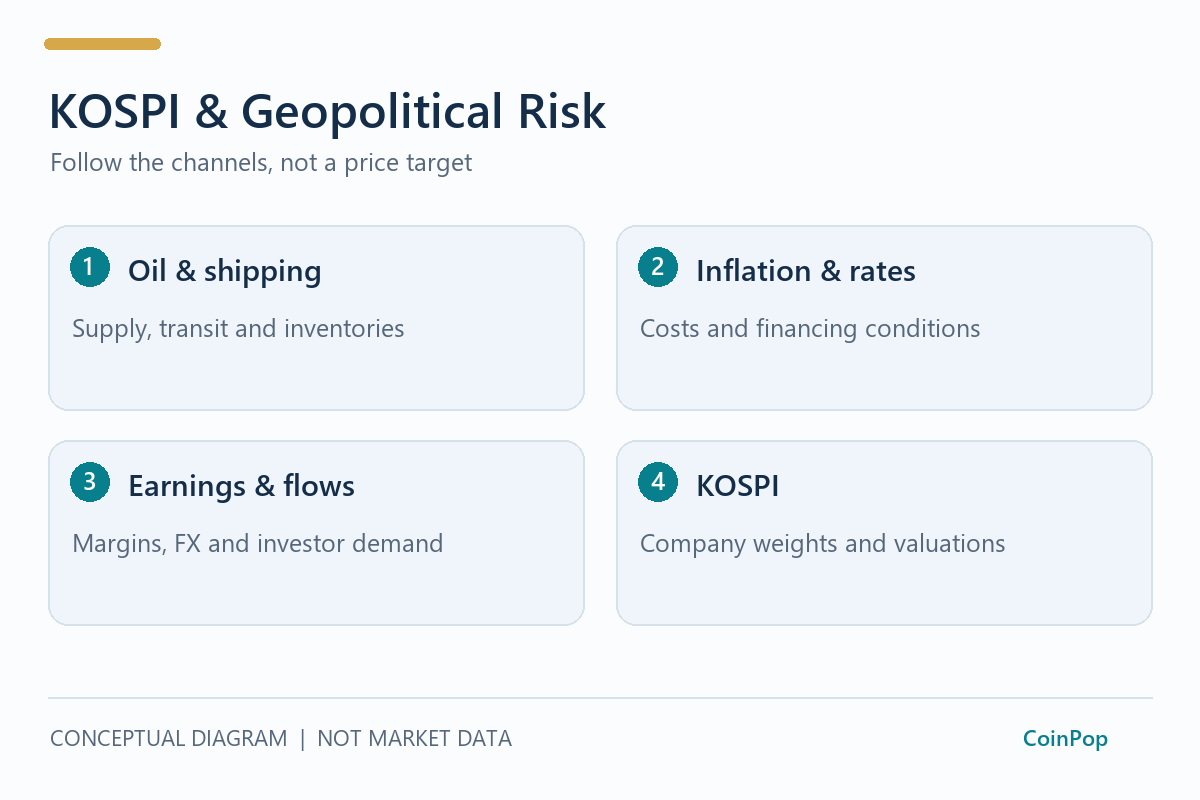
What this outlook means: a geopolitical market outlook is not a prediction that one headline will push every asset in the same direction. It is a transmission map: Middle East oil and shipping conditions can change energy costs, inflation, interest-rate expectations, exchange rates, company margins and investor risk appetite. Each link in that chain should be checked before acting.
US–Iran War Stock Market Outlook 2026: The Evidence to Start With
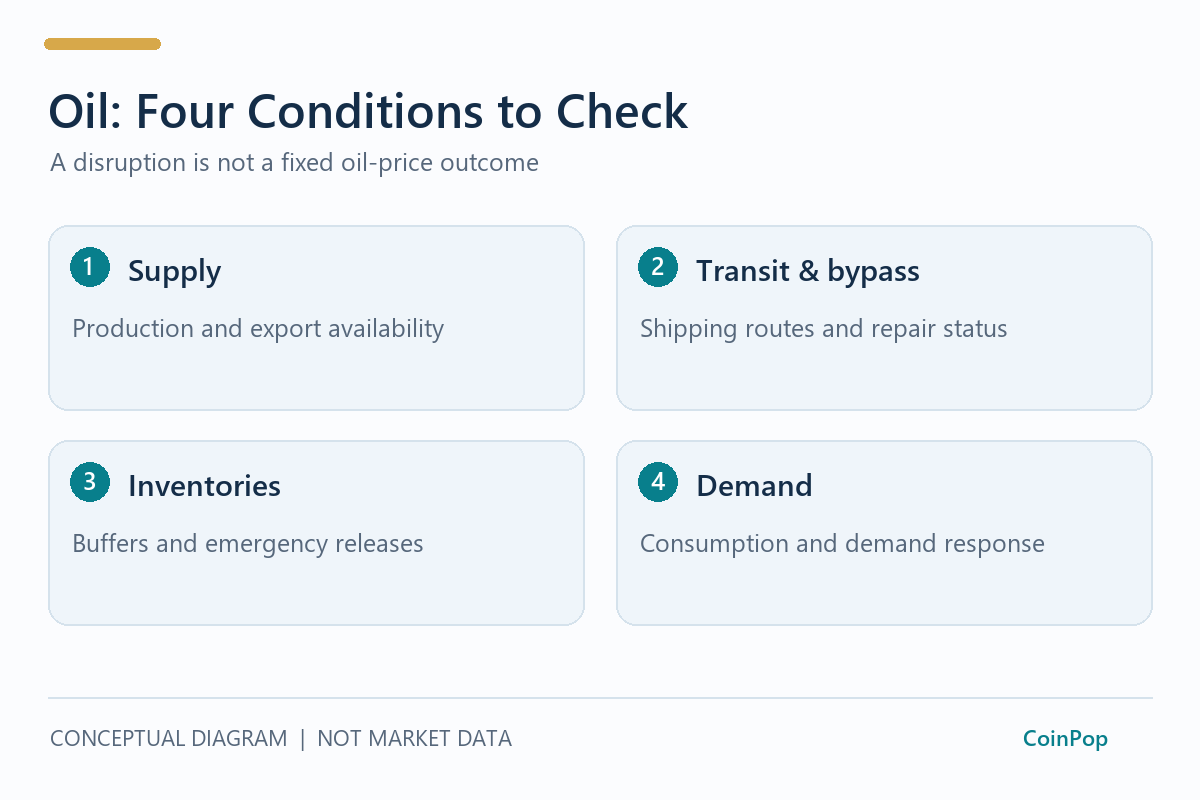
The U.S. Energy Information Administration’s September 2026 Short-Term Energy Outlook, released September 9 and completed September 3, says Brent crude averaged about $91 per barrel in August. Its central forecast is around $90 in the second half of 2026, followed by a gradual decline as production and shipping recover. The EIA also stresses that changing conflict conditions can produce substantially more short-term volatility than the central forecast.
For South Korea, the Bank of Korea’s August 27 decision is the other essential reference. The Bank raised the Base Rate from 2.75% to 3.00%, described exports and investment—especially semiconductors—as supportive of growth, and identified Middle East conditions, oil prices and the exchange rate as major uncertainties. Its September 10 Monetary Policy Report says future rate decisions will remain data-dependent.
Three Scenarios for U.S. Stocks and KOSPI
| Scenario | What would confirm it | Likely market pressure points |
|---|---|---|
| Gradual normalization | More stable shipping, recovering production and easing oil prices | Less inflation pressure may help rate-sensitive growth stocks; airlines, transport and chemical companies may see cost relief |
| Renewed disruption | Tanker attacks, new sanctions, lower exports or another chokepoint shock | Energy and freight costs may rise; fuel-sensitive margins and high-valuation stocks may face pressure |
| AI strength despite expensive energy | Semiconductor orders and cloud spending remain strong while oil and rates stay elevated | Companies with durable earnings may separate from weaker or highly leveraged peers |
Popular U.S. Stocks to Monitor: NVIDIA, Tesla and the AI Leaders
A September 11 page-view snapshot from StockAnalysis placed Oracle, NVIDIA and Micron among its most-viewed U.S. stocks, with Apple, Meta, Amazon, Microsoft, Alphabet, AMD and Tesla also in its top 20. This is one website’s attention metric—not universal Google search volume, a recommendation or evidence that those shares will outperform.
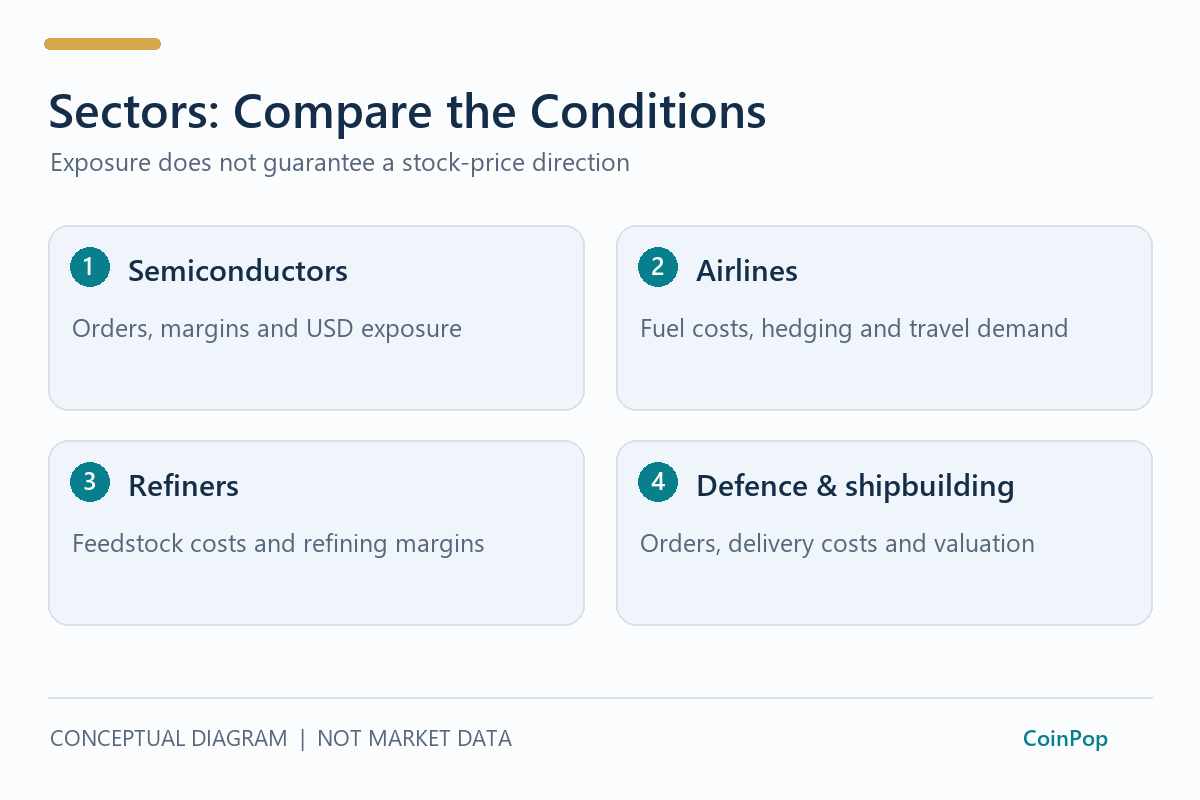
- NVIDIA and Micron: monitor AI and memory demand, export restrictions, supply, earnings revisions and valuation.
- Tesla: monitor deliveries, pricing, automotive margins, financing conditions and energy costs rather than conflict headlines alone.
- Oracle, Microsoft, Amazon and Alphabet: check whether heavy cloud and AI investment is converting into durable revenue and free cash flow.
- Energy and defense stocks: check realized prices, costs, contract backlogs and valuation. A geopolitical escalation does not guarantee gains.
KOSPI Outlook: Samsung Electronics and SK hynix
Samsung Electronics and SK hynix remain central to the KOSPI discussion because the Bank of Korea says semiconductor exports and investment are supporting the Korean economy. That does not make either stock immune to valuation, memory-cycle, export-control or foreign-flow risk.
The useful transmission chain is:
Middle East disruption → oil and freight costs → Korean inflation and USD/KRW → interest-rate expectations and foreign flows → sector earnings and valuations.
For Samsung Electronics and SK hynix, compare each quarterly earnings release with memory pricing, high-bandwidth-memory demand, capital expenditure, customer concentration and management guidance. For airlines, chemicals, transport and other energy-sensitive Korean sectors, compare fuel and freight costs with the company’s ability to pass those costs to customers. Do not assume a past KOSPI rebound will repeat on the same schedule.
USD/KRW, Interest Rates and Foreign Flows
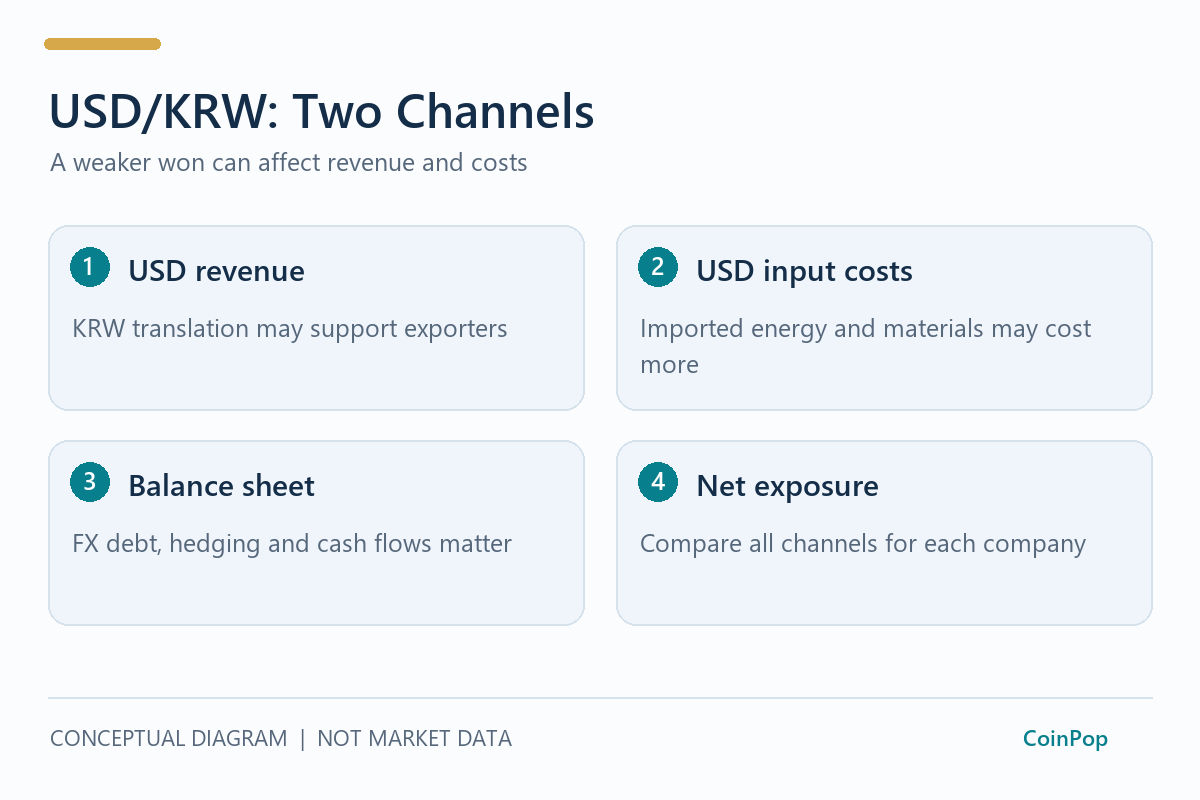
USD/KRW matters because South Korea imports energy in dollars while many large exporters earn substantial foreign-currency revenue. A weaker won can raise imported costs even when it helps translate overseas revenue. The net effect differs by company and cannot be inferred from the exchange rate alone.
Instead of relying on a single exchange-rate target, monitor the Bank of Korea’s policy guidance, Korean inflation, oil prices, the broad U.S. dollar, foreign buying and selling in Korean equities, and company-level hedging disclosures. The Bank of Korea’s current message is explicitly conditional, so an exact year-end rate or USD/KRW level would overstate what the evidence can support.
What About Bitcoin?
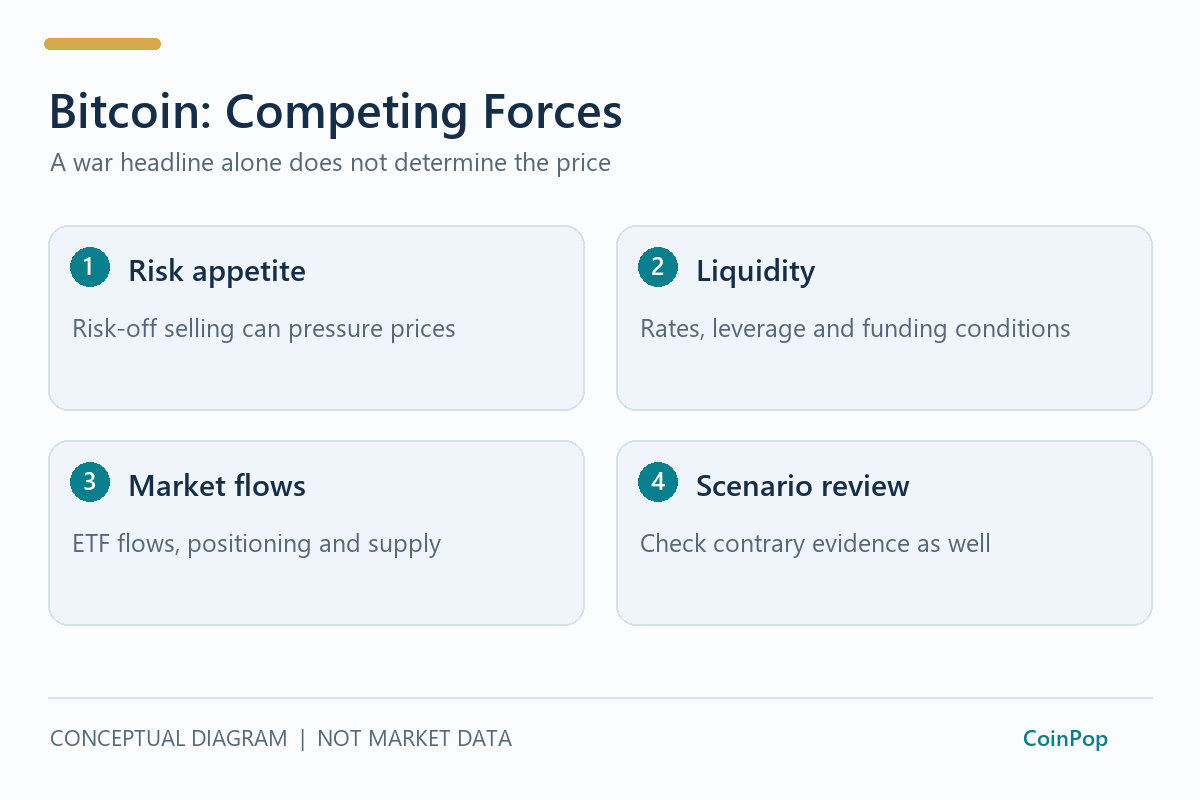
Bitcoin can trade as a high-volatility risk asset, a liquidity-sensitive asset or, at times, a perceived alternative store of value. Those roles can change quickly. A war headline does not establish a reliable Bitcoin direction, and institutional involvement does not eliminate drawdown risk. Monitor spot and derivatives positioning, ETF flows where available, the U.S. dollar, real yields and market liquidity; avoid treating an unsupported price target as a base case.
A Weekly Checklist for Investors
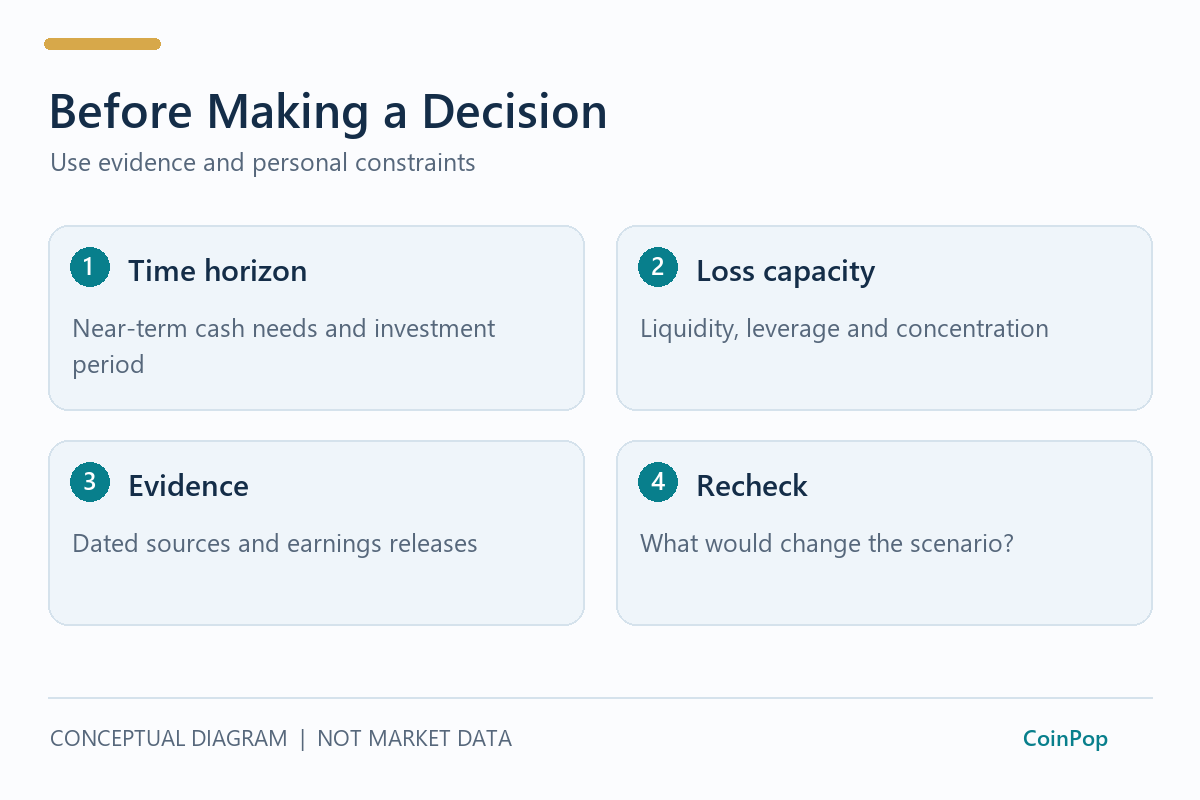
- Check Brent oil and actual production and shipping flows—not only conflict headlines.
- Check USD/KRW and foreign-investor flows into Korean equities.
- Read current inflation data and central-bank guidance in the United States and South Korea.
- Track earnings revisions for NVIDIA, Micron, Samsung Electronics and SK hynix.
- Compare valuation, margins, cash flow and balance-sheet strength before treating a popular ticker as an opportunity.
- Write down what would invalidate your scenario before changing a position.
Methodology and Sources
This update uses the U.S. EIA’s September 2026 oil-market outlook and the Bank of Korea’s August 27 policy decision and September 10 Monetary Policy Report as its primary macroeconomic sources. The popular-stock list is explicitly labeled as a single-site page-view snapshot. CoinPop removed the previous article’s unsupported probabilities, exact price targets, prescriptive allocations, entry levels and guaranteed-outcome language.
- U.S. EIA — September 2026 Short-Term Energy Outlook: Global Oil Markets
- Bank of Korea — Monetary Policy Decision, August 27, 2026
- Bank of Korea — Monetary Policy Report, September 10, 2026
- StockAnalysis — trending-stock page views, snapshot checked September 11, 2026
Frequently Asked Questions
How can the US–Iran conflict affect the U.S. stock market?
The main channels are oil and freight costs, inflation, interest-rate expectations, government spending, corporate margins and risk appetite. The effect varies by sector and can reverse when shipping or diplomacy changes.
How can it affect KOSPI and Korean stocks?
South Korea’s energy-import exposure makes oil and USD/KRW important. At the same time, semiconductor exports can support growth. Investors should therefore evaluate company earnings, exchange-rate sensitivity and foreign flows rather than making a single index call.
Are NVIDIA, Tesla, Samsung Electronics or SK hynix automatic buys?
No. They are widely followed companies with distinct drivers and risks. Popularity is not valuation evidence, and this article does not provide personalized investment advice.
What would change this outlook?
A material change in Middle East production or shipping, oil prices, inflation, central-bank guidance, the dollar, semiconductor earnings or company guidance would require the scenarios to be reassessed.
Risk disclosure: This article is general educational information, not personalized financial, tax or legal advice. Markets can move sharply, forecasts can be wrong, and past recoveries do not guarantee future results. Verify current official data and consider your own objectives, time horizon and ability to bear loss.